
The copy editor acts as the legal and ethical safety valve for any creative or research work, a role that extends far beyond merely correcting grammatical errors to include monitoring the content’s integrity against violations that could damage the author’s or publisher’s reputation. Understanding intellectual property rights for editors is not something optional but an inevitable necessity to protect the text from legal accountability. In the following few lines, this article is going to tackle the vital axes for dealing with citation laws, protocols for combating Plagiarism in Writing, and mechanisms for Source Citation to ensure the text’s full honesty and credibility.
First Pillar: Intellectual Property Rights for Editors and Legal Liability
The Editor’s Role in Monitoring Copyright breaches and Alerting the Author
The core responsibility of a copy editor involves safeguarding the edited work from any copyright infringements; while the editor is not necessarily required to conduct a comprehensive check of every source, he must be aware of the areas of concern that indicate a potential legal problem. When the editor encounters a lengthy quotation, a poetic text, or song lyrics without clear attribution to the original source, the editor is required to raise an immediate alert.
Editor’s Legal Liability is limited to flagging potential issues, not making executive decisions; the responsibility for obtaining permissions falls primarily on the author.
However, the editor’s proactive role is to place question marks around any questionable content and direct clear queries to the author regarding the sources of quoted texts, a preventive approach that saves everyone from excessive legal costs and problems that could destroy the work’s reputation.
The prudent editor keeps a mental checklist of everything requiring documentation, such as capitalized trademark names, dates, historical events, statistics, and any claims that could be legally challenged. Constant caution against unintended defamation is what makes the editor a vigilant guardian who does not miss minor details that could turn into complex cases.
Guidelines for Quoting Poetry and Song Lyrics
There is a fundamental difference in safe quoting rules between prose texts and poetic or lyrical works; this represents a fine line that every editor must pay close attention to. Regarding standard prose texts, it is generally permissible to quote up to 250 words in total from a single work, whether continuous or taken from scattered parts of the authored work. This limit is considered acceptable within the concept of “Fair Use” in most legislations.
However, the situation totally changes when discussing poems and song lyrics because these works are inherently short; a poem might not exceed a few lines or stanzas, so quoting a line or two may represent a large percentage of the original work. This makes it a clear violation of copyright even if the quote is short in quantity. Plagiarism in Writing often begins here, where some wrongly assume that quoting a short text is permissible for general use.
The professional editor realizes that musical works are protected by multiple layers of rights: lyrics rights and musical composition rights, so even if the work quotes only the words without the music, permission remains necessary unless the work has entered the scope of Public Domain Works. The golden rule that any editor should follow is that the shorter the original work is, the more legally sensitive quoting from it becomes; therefore, upon reviewing a text containing verses of poetry or song lyrics, the editor must verify the existence of explicit permission or confirm that the work falls under the public domain works. Otherwise, the editor must raise this issue with the author and the Executive Editor before it is too late.
Legal Handling of Trademarks and Registered Names
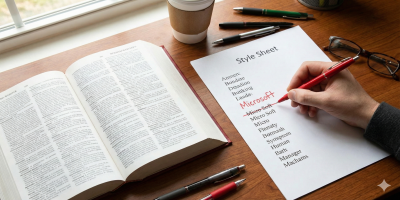
Dealing with brand names represents a unique challenge in the editing process, where linguistic accuracy intersects with legal compliance. Editor’s Legal Liability begins with verifying the correct spelling of brand names because errors here may expose the publisher to legal problems or at least demonstrate clear unprofessionalism. Is it “Microsoft” or “Microsoft”? Is it “7-Eleven” or “7-11”? These details are not trivial; they are fundamental.
A smart editor uses reliable search engines to verify official brand names and checks official company websites to ensure the correct spelling of their approved commercial entity names. Attention must also be paid to capital letters written in the middle of a word, numbers, non-alphabetic symbols like the exclamation mark in “Yahoo!”, and the periods separating letters in acronyms like “N.B.C.”; all these elements are recorded in a style sheet prepared by the editor to ensure consistency throughout the whole text.
Legally, editors are not required to include trademark symbols like © or ® in regular texts, as these are visually distracting and unnecessary in articles and books, except in advertisements mentioning competitors’ products. For verification, the editor can refer to reliable dictionaries like Merriam-Webster’s Collegiate Dictionary or the International Trademark Association‘s searchable database. In literary writing, it is permissible to use trademark names to add realism to the text, whereas in technical or academic writing, it is preferable to substitute brand names with generic terms whenever possible.
Second Pillar: Intellectual Property Rights for Editors: The Treasure of Public Domain Works
Legal Standards for the Loss of Copyright Protection for Older Works
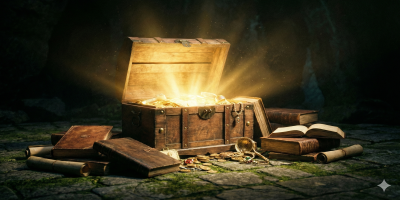
In the context of intellectual property rights for editors, public Domain Works represent a precious treasure for writers and editors alike, allowing the use of rich content without the need for complex permissions or financial fees. A work enters the area of public domain works when its copyright protection period expires or when the work was ineligible for protection in the first place. The basic rule is that works published a long time ago become available to everyone without copyright restrictions.
For instance, in the USA works published before 1928 are generally considered within the public domain works, but laws vary by country. Some works enter the public domain because their authors did not renew their copyright at the end of the initial term, or because they voluntarily relinquished their rights. Editors need to understand these details because mistakenly classifying a protected work as public domain can lead to serious legal consequences. The time criterion is not the only factor; some official government works are considered part of public domain works regardless of their publication date, such as US federal documents, though this does not apply to all governments globally, so caution is always required. The golden rule states that in cases of doubt, a work should be presumed to be protected unless proven otherwise.
Strategies for Using Public Domain Works in Digital Content
Investing in Public Domain Works within digital content opens wide creative horizons while maintaining legal safety. Writers and editors can quote entire texts from classic novels, use ancient poems, or cite long passages from historical philosophical works without any fear of any kind of legal liability. This freedom transforms public domain works into an invaluable source for educational content, literary blogs, and cultural websites. The most effective strategy involves integrating these texts directly into the author’s content rather than treating them as external appendages, allowing the editor to enrich modern texts with classic citations that elevate the work’s quality.
In advertising, quotes from public domain works can be used to add cultural depth to marketing campaigns, provided the usage aligns with ethical contexts. Although legally available, some works may be culturally or ethically inappropriate for use in certain commercial contexts. The optimal strategy combines legal knowledge of public domain limits with cultural sensitivity regarding how to employ these materials respectfully.
Resources for Accessing Free Public Domain Materials
Project Gutenberg is considered the largest digital library for Public Domain Works, hosting over 70,000 free eBooks in various formats. Established in 1971, it is the oldest digital book initiative in the world and features an effective search engine allowing searches by author, title, or subject, facilitating quick access for editors. The site does not claim to include all available works, but it covers a wide range of classical literature, philosophy, science, and history.
On the other hand, Bartleby offers more specialized experience, classifying content into separate lists for references, poetry, and fiction. This site is particularly useful for editors looking for famous quotes, as it includes sources like Bartlett’s Familiar Quotations. Furthermore, the site’s interface is user-friendly and provides texts of reliable quality.
In addition to these major sources, editors can utilize sites like the Internet Archive, which holds millions of digital pages, including many of public domain works; the key is to always verify the copyright status of the work before use, as some sites may contain works that are still protected in some countries despite being available digitally.
Third Pillar: Plagiarism in Writing and Source Citation
The Difference Between Quoting and Plagiarism in Writing
The fundamental Difference Between Quoting and Plagiarism in writing lies in transparency and the proper attribution of work to its original author. Quoting implies copying the exact words from another source and placing them within quotation marks with a clear reference to the source and author; this is a completely legitimate practice essential in academic research and journalism. In contrast, Plagiarism in Writing occurs when a writer uses others’ words or ideas without attributing them to their original authors, misleading the reader by making him believe that this content is this writer’s personal creation.
However, plagiarism in writing is not limited to verbatim copying; the theft of ideas is also a serious violation. If a writer reads a theory or analysis in a source and then rephrases it in his own words without indicating the original source, he is committing intellectual theft.
Here, the distinction manifests in intellectual honesty and respect for intellectual property rights for editors, as correct Source Citation transforms a quote from theft into a legitimate academic citation.
The experienced editor knows how to distinguish between legitimate paraphrasing and disguised plagiarism; acceptable paraphrasing requires a substantial change in linguistic structure and style, not merely replacing some words with their synonyms. Even with excellent paraphrasing, attributing information to its original source remains a legal and ethical duty. This level of precision in Source Citation is what distinguishes solid academic work from casual writing.
The most confusing situation arises when ideas are similar without prior direct access from the author to the original source; if two researchers reach the same conclusion independently, this is not plagiarism, but proving the absence of prior knowledge is something difficult. Therefore, it is always advisable to document the research path and dates of access to ideas, where the editor’s role is consultative, asking the author about sources upon suspicion without direct accusation.
How to Cite Personal Interviews and Visual Media
Documenting visual media requires the same precision as written texts, perhaps even more so. Photographs, illustrations, charts, and even screenshots are all subject to copyright and need clear attribution. The journey of documenting personal interviews and visual media begins with identifying the original source and the copyright holder; the photographer or illustrator retains the rights to their work even if it is published elsewhere.
When using an image or drawing, the documentation must include the creator/photographer’s name, the work’s title or description, the source where it was published, and the creation date if available. It is the author’s responsibility to track down the copyright owner and obtain permission, while the editor is responsible for verifying this permission or raising the question if documentation is missing.
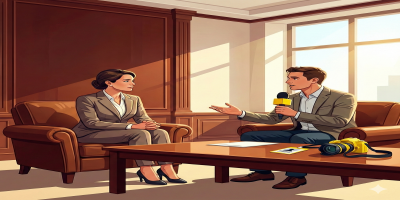
Regarding How to Cite Personal Interviews, the process differs slightly. Whether formal, informal, via email, or face-to-face, information gleaned from interviews must include the name of the interviewee, his title or position, and the date of the interview. Even casual conversations that result in important information need to be documented; this protects the author from accusations of theft and gives credit where it is due. In addition, it is worth noting that the mechanisms governing the documentation of visual media and interviews do not constitute bureaucratic complexity, but serve as a guarantee of professional integrity.
Limits of “General Knowledge” and Cases That Do Not Require Reference Citation
The concept of “General Knowledge” represents a gray area that editors need to understand accurately. Information considered general knowledge does not require Source Citation because it is widely available and known to the target audience; for instance, stating that World War I occurred between 1914 and 1918, or that Paris is the capital of France, does not require a citation or specific attribution.
However, defining what constitutes “general knowledge” depends on the context and the audience; what is general knowledge to specialists may not be so to the general public. A practical rule is that if information is found in multiple general reference sources without attribution to a specific researcher, it is likely general knowledge. Conversely, if the information is the result of investigative research, specific analysis, or specialized opinion, it requires attribution to its original source, even if it seems simple.
Fourth Pillar: Editor’s Protocol When Suspecting Plagiarism
Steps for Digital Verification and Independent Investigation to Confirm Editorial Suspicions
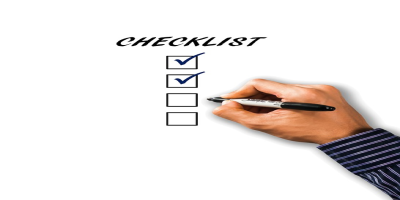
When an editor suspects Plagiarism in Writing, the digital verification phase begins. The first step is using search engines to look for sentences or entire paragraphs from the questionable text by placing a distinctive sentence within quotation marks in a Google search box, which often reveals the original source if published online. There are also specialized plagiarism detection tools like Turnitin or Copyscape that compare text against millions of sources.
However, digital verification alone may not suffice, especially if the source is not available digitally. Here lies the role of independent investigation; if a specific paragraph seems stylistically different from the rest of the text, or if the information appears highly specialized, the editor must search within the relevant works. Moreover, reading previous works on the same topic might reveal similarities that automated tools miss.
Crisis Management: The Impact of Plagiarism on Production Schedule and Professional Reputation
Discovering Plagiarism in Writing at a late production stage represents a genuine crisis that jeopardizes the entire schedule; rectifying plagiarism often necessitates rewriting whole sections, scrambling for late permissions, or in worst-case scenarios, canceling the publication altogether. as time is a decisive factor in crisis management, professional editors communicate immediately with the executive editor the moment they suspect plagiarism.
Regarding reputation, publishing a work containing plagiarism destroys the credibility of everyone involved: the author, the editor, and the publisher. Therefore, an ounce of prevention is worth a pound of cure, making the editor’s proactive role in identifying problems early invaluable in upholding intellectual property rights for editors and preserving professional integrity.
Drafting Professional Editorial Queries to the Author
Formulating editorial queries addressed to the author is a nuanced art balancing clarity with diplomacy. When suspecting plagiarism, the editor must ask questions respectfully without implying direct accusations. Instead of writing “This paragraph is stolen,” the query can be neutral, such as “Could you clarify the source of this information?” or “I need documentation for this quote to ensure copyright requirements are met.”
Good queries are specific, pointing to the exact page or paragraph, and explaining the nature of the potential problem. They should show that the editor is acting as an ally to the author, not an adversary; phrases like “to protect your work from legal issues” make the query appear as a service rather than an accusation.
It is also important to distinguish between queries that the Executive Editor can resolve and those requiring the author’s direct intervention. The Executive Editor typically passes on to the author only those queries he cannot answer himself. Therefore, the copy editor must be clear in determining the severity level of each query; specifically, queries related to Plagiarism in Writing or copyright issues must be flagged as high priority to ensure they are not overlooked or filtered out.
Conclusion: The Editor as a Guarantor of Content Quality and Integrity
To uphold intellectual property rights for editors, the copy Editor acts as the primary safeguard for a text’s honesty and legal safety. By maintaining a deep understanding of intellectual property rights, mastering Source Citation techniques, and staying constantly vigilant against Plagiarism in Writing, the editor protects the reputation of both the author and the publisher. Developing these skills is not optional, but a professional necessity that distinguishes the capable copy Editor from others. It transforms him into a true partner in creating ethical content that respects everyone’s rights and meets the highest legal and ethical standards.